Armour of the Common Footman
Arms and Armour of the Common Foot Soldier
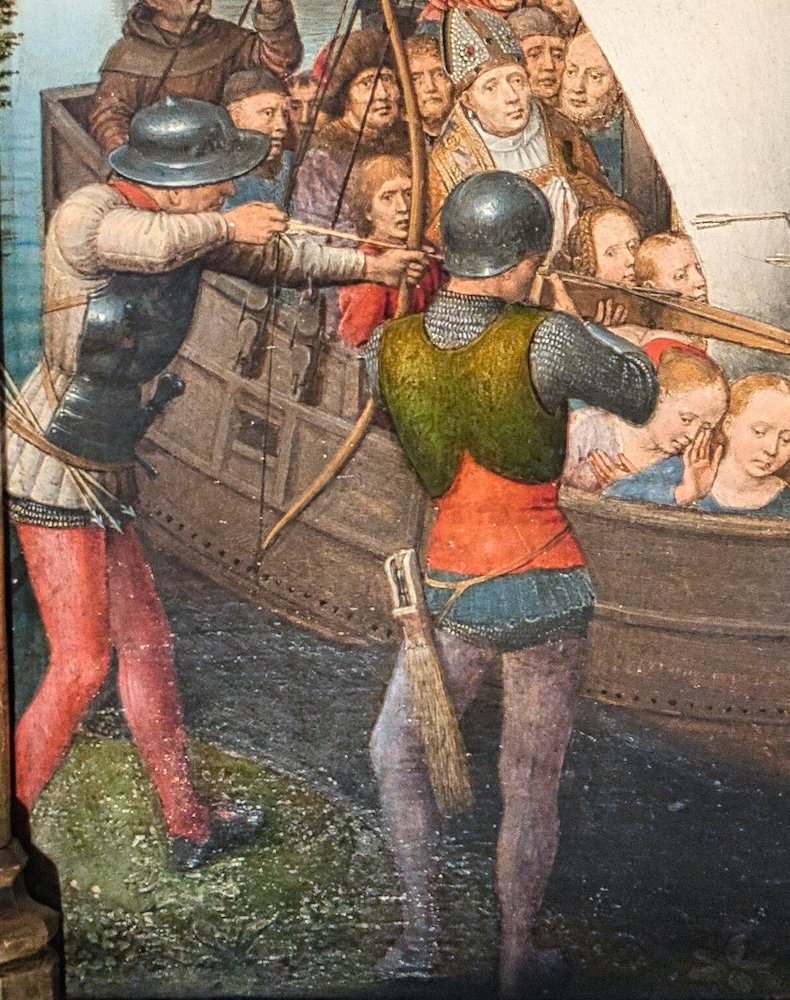
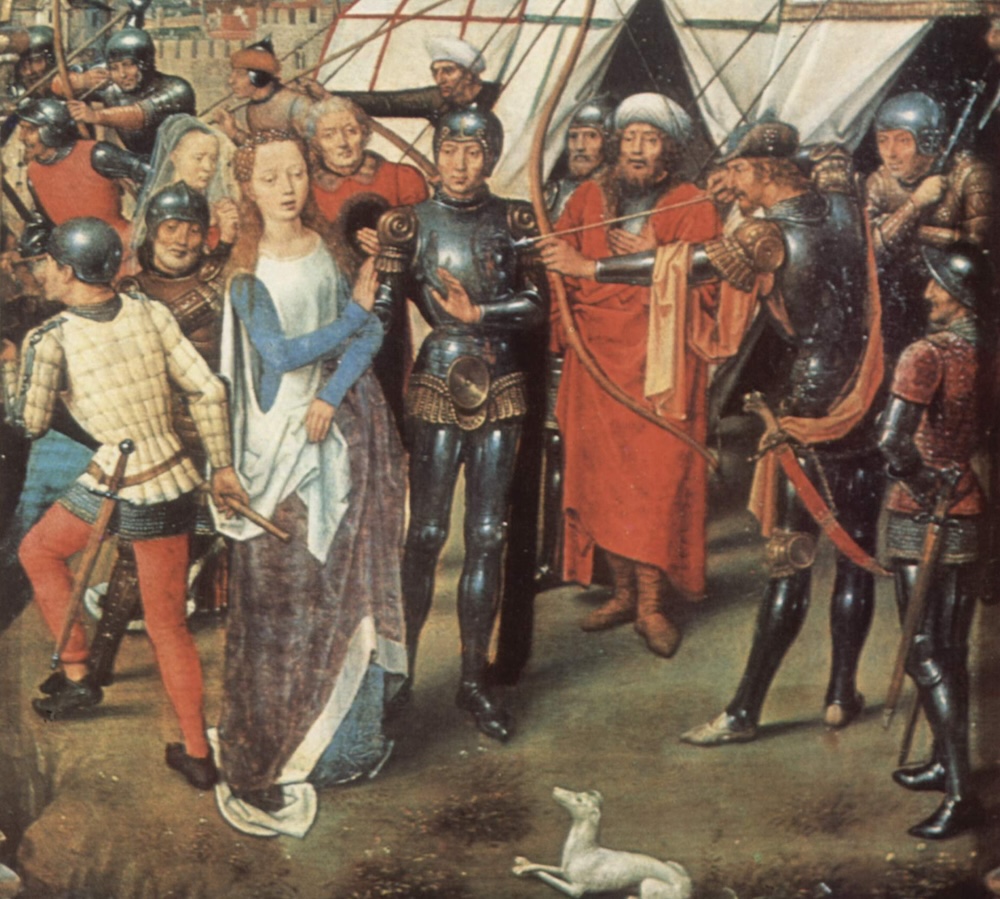
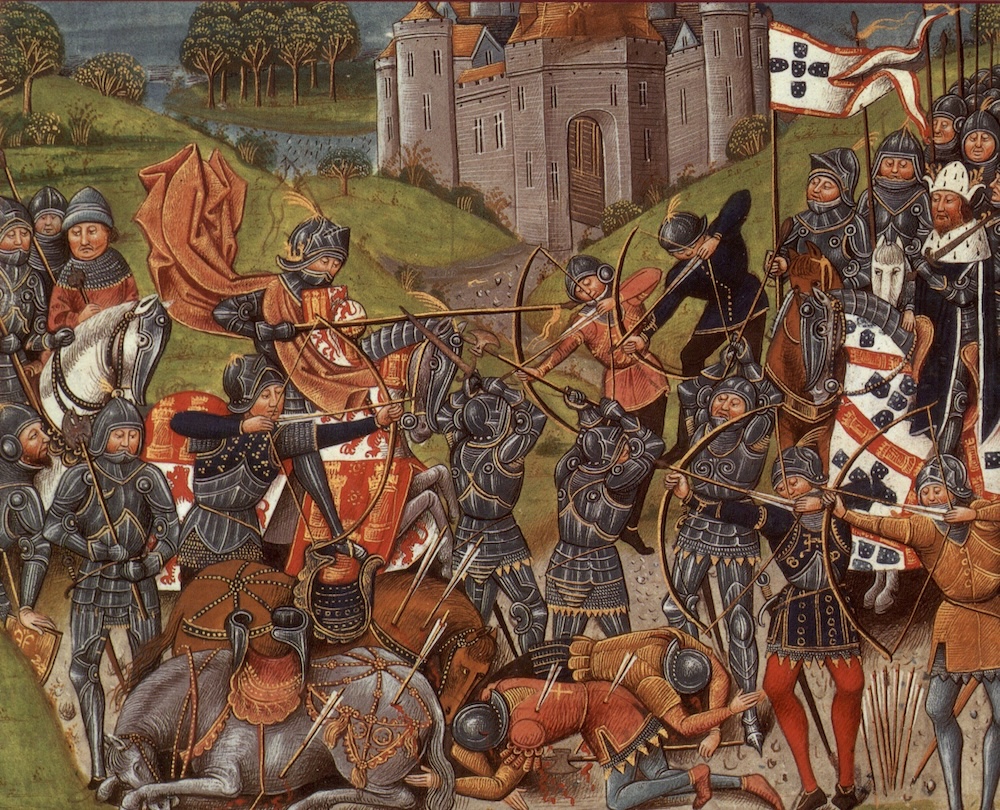
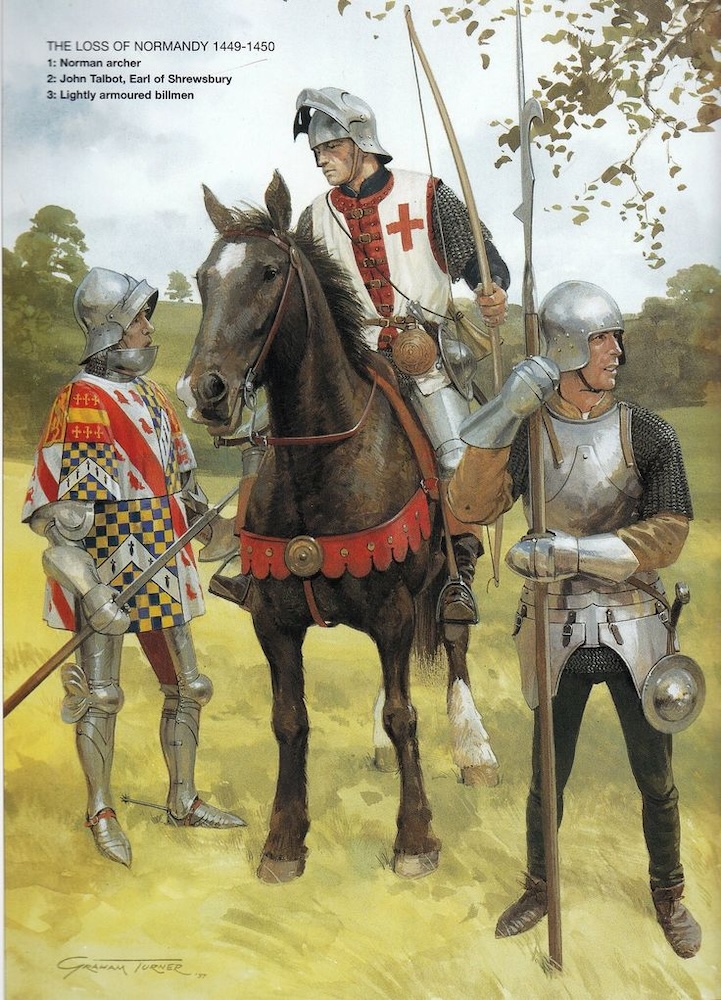
In England, every man was expected to have arms and armour in correlation to their possessions or income. Incomes in excess of £100 per annum were termed “greater knights, actual and potential.” Those with income between £40 and £100 per annum were “lesser knights.” The stratum composed of those with incomes between £20 and £39 per annum were “adequate to maintain the dignity of an esquire.” Those men were expected to have not only arms and armour for themselves but also the ability to outfit a number of retainers to defend the realm in times of conflict. What about those below the rank of esquire? What did the common foot soldier wear in the mid-15th century? It came down to what they could afford or what their lord loaned them.
Historical References
Contemporary accounts always offer the best picture of what was considered ‘normal.’ Sir John Fortescue, Chief Justice of the King's Bench from 1442-1460, wrote a treatise on English Law that was published posthumously about 1553. He wrote at length of the differences between England and France, especially in regard to the impoverishment of the commons by the French crown to prevent rebellion. He argued that it was a matter of national security. If the English commons were made poor, “thai shulde not haue wherwith to bie hem bowes, arroes, jakkes, or any oþer armour off defence.” He went on to say that the requirement for them to be “much excersised in shotynge, wich mey not be done withowt ryght grete expenses.” In other words, the commons are expected to spend a considerable amount of their own money in order to practice shooting. The alternative would result in the ‘destruction of the greatest might of our realm.’
Since the Assize of Arms of 1252, extended military obligations beyond knights and freemen, as required a century before, by mandating sheriffs to summon all "citizens, burghers (those living in towns), freeholders, villeins, and others" between the ages of 15 and 60 to be assessed and swear an oath to bear arms proportional to their landholdings or possessions. Those valued at 40 - 100 shillings per year wear required to have sword, bow, arrows, and knife. The rank above them were required to own quilted jacket, iron hat, sword, spear, and dagger. Those with lands yielding 15 pounds per annum were required to possess hauberk, iron hat, sword, dagger, and a horse.
On the subject of the mandatory shooting practice, a proclamation was made against throwing games, handball, football, cambuc, cockfighting and other ‘vain’ sports rather practice bow shooting on Sundays and holidays. It became statute in 1388 adding tennis and dice to the list of prohibited activities.
Norwich records from about 1457 include a document where 600 named individuals were to be able to supply 480 jacks as well as 5 haubergeons (maille shirts). A contemporary note at the end states that a jack or haubergeon is understood to be a unit comprising of the jack or haubergeon itself, a sallet, a bow, and one sheaf of arrows.
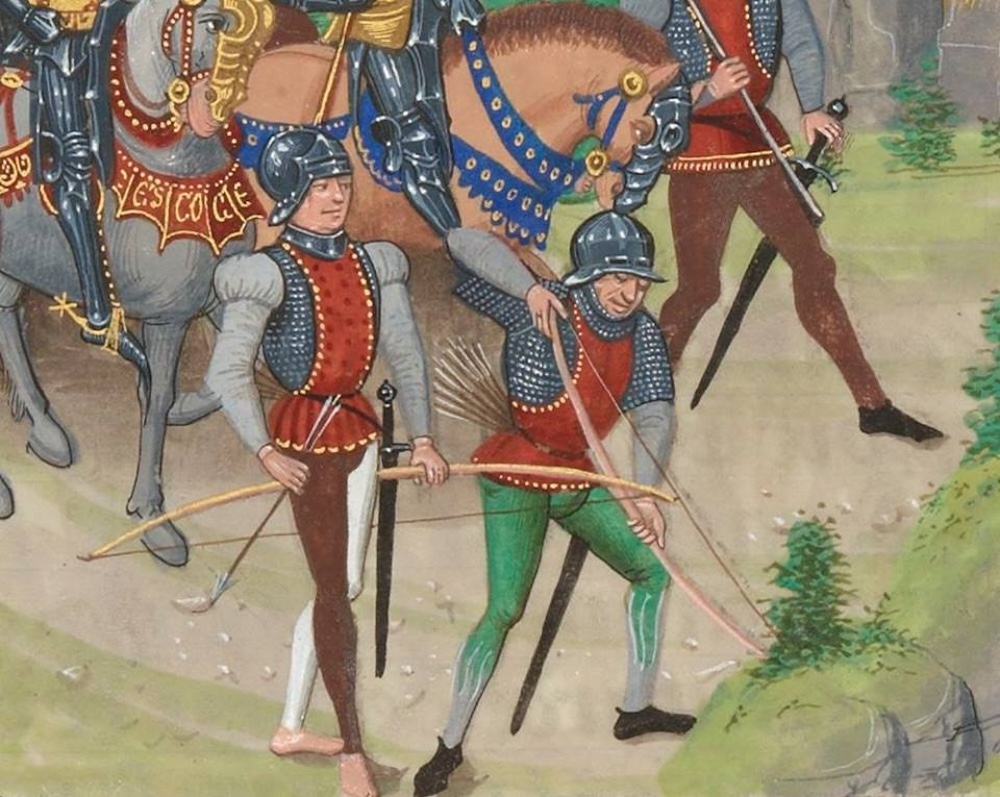
Dominic Mancini, an Italian Dominican friar residing in England in 1483, described the 6,000 foot soldiers Richard III brought to London for his coronation: “Almost none of them is without a helmet… On the breast and the remainder of the body protections or iron are worn only by the more worthy, who make use of cuirasses and suits of mail. The great mass of these soldiers, in truth, have more convenient garments, tunics dropping into the area of the genitals and stuffed with tow or some other soft material. They say that the softer they are, the better they sustain the blows of arrows and swords, and furthermore that they are lighter than iron in summer, and more useful in winter.” The English soldiers were also noted as usually wearing an “iron” shield (likely a buckler) in conjunction with their swords.
A chancery warrant issued in June 1471, says that Olivier de la Marche, the famous Burgundian soldier, diplomat, and man of letters, was planning to send 500 complete harnesses, as well as 500 brigandines and 1,000 sallets for archers, into England for private sale. The brigandines were “garnished and complete,” explained to include sallets, bevors, leg harness, gardes, gardebraces.
A Jack was a jacket made of up to 20 or more layers of primarily linen cloth. They were the most common form of armour worn by the average foot soldier. Black was the costliest color to dye cloth, so black linen was also a status symbol. As an added layer of protections, the above ones also included a layer (internal shirt) of maille. The pieces of maille could refer to gussets or sections of mail cut from a once-complete shirt.
Sir John Howard, later the Duke of Norfolk, left behind meticulous records of his daily expenses where were published in the 19th century under the title Manners and Household Expenses of England in the Thirteenth and Fifteenth Centuries. In October 1468, he outfitted a number of men to accompany his son, Master Nicholas Howard, to join the army of Lord Scales in an expedition to patrol the English Channel. Sir John paid £6, 16s., 8d. for a ‘harnes complet fore hym, and an estriche fether’. He gave Nicholas another £22 to cover his expenses.
Master Nicholas was the son of a knight. How were the rest of the men outfitte? A ‘harness complete’ with ‘an estriche fether’ was purchased for a man named John Nytere at a cost of £7. A notation records the same man borrowed a salet withoute a veser. He was paid 20 shillings in wages. He seems to be an exceptional case of a man who had been in Sir John's services for quite a while. It is necessary to look at a cross section of other men in order to better understand what a 'normal' footman might be expected to wear into conflict.
John Hobes was given a pair of brigandines set on crimson velvet along with a pair of maille sleeves, a sallet with visor, and a Welsh bill at a total cost of 39s., 3d. Rawefe Barlynskose was lent a pair of brigandines made in Southwark and lent a sallet. John Davy was given a pair of brigandines, a sallet and a ‘fyne standard of maylle (maille collar). Robart Fynche was given a jacket, a pair of brigandines covered in black cloth with pauldrons (shoulder defenses) of the same. John Strawenge, who was on his own horse, was provided a pair of brigandines covered in black leather, and standard of maille, a bow, and a Milanese sallet with visor. Numerous other men were paid similar wages to these men but were not issued any equipment, suggesting they had their own kit
An Archer in a Knight's Retinue
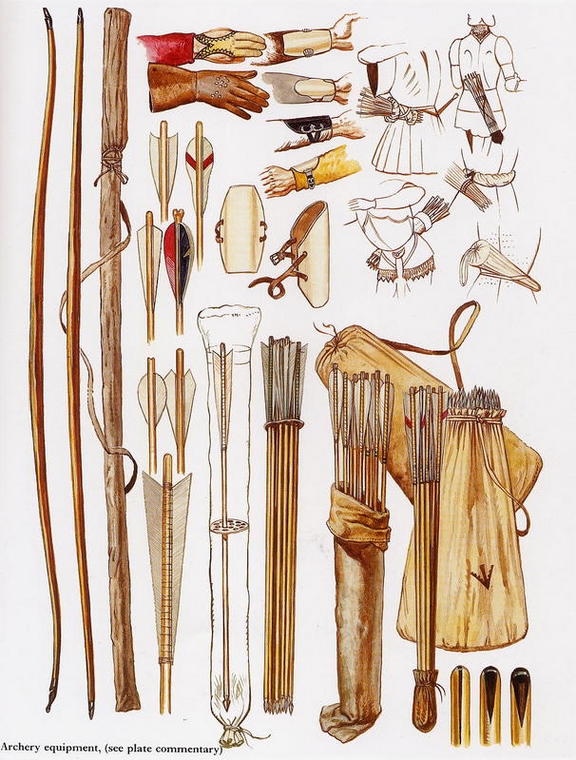
A closer inspection of Sir John Howard's expenses offers an example of what it might be like to be hired as an archer into a knight's retinue. A series of entries dated 3rd October 1467 record that a man named Danyelle was taken into paid service for 40 shillings per year. He was given 2 gowns and a house for his wife to dwell in at Stoke. He was apparently an archer as he was given a standard bow valued at 6s., 8d. He was further outfitted with as many strings as he could buy for 6d. and a shooting glove worth 4d. Within days, he additional doublets were made for him as well as payments made to the fletcher for arrows and to Fysheloke bowere for 2 new bows worth 10s., 6. A final line provided 8d. for a bow case for him.
Padded Jack Construction
In 1463, Sir John Howard personally traveled to the market town of Holt in Norfolk in order to have a dobelete of fense made. There are references in his documents to Welsh jacks, Scottish jacks, and the doublet of defense. There is some argument about the precise differences; however, they all were comprised of multiple layers of quilted cloth for lightweight protection when steel was unavailable or not practical. On page 239, he provides his expectations to the tailor:
And the 24th day of January, I took to the doublet maker of the Holt to make me a doublet of defense, for ever forequarter (front panel) 18 folds (layers) thick of white fustian, and 4 folds of linen cloth, and a fold of black fustian to put on the outside; and for every back quarter 16 folds of white fustian, and 4 of linen cloth, and 1 of black, for the the covering; and for the sleeves 1 fold of black fustian, and 6 of white, and 2 of linen cloth. The cost was shown as 22 pence.
Short answers for those looking to join a historical reenactment group
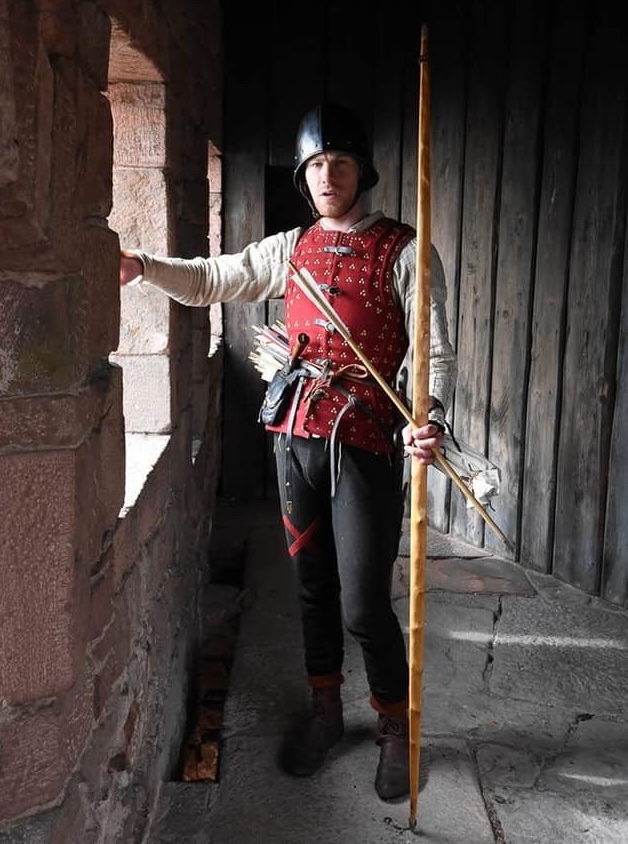
Avoid the lies that so many people try to tell themselves to justify buying budget grade bits and bobs of armour from different eras such as it was looted from the battlefield or handed down from a previous generation (or three). It is wholly unrealistic, especially for anyone wanting to portray anything above the lowest level of the commons/peasantry. As illustrated in the above contemporary sources, those in the employ of a knight either already possess basic kit, or their lord provides it for them. See the advice article Armour Build Series: I. The Long Game for more information. Pay special attention to the last section entitled The Long Game. Follow in the steps of the men in Sir John's retinue. Start with a high-quality, form-fitting brigandine as the basis of a kit that can be upgraded to man-at-arms and eventually even knight.
Period Clothing
"Good clothing is fundamental to living history. Unlike other pieces of equipment, clothing is indispensable – it is the minimum requirement. Before buying shiny armor, the reenactor needs something to wear underneath it … and to live, walk, work and fight in it." -- Company of Saynte George Costume Guide: Men
On the subject of period clothing, there is little that could be written here that would not be a poor duplication of the efforts already achieved by the Company of Saynte George, one of the preminent living history organizations in existence today. Their "high fidelity reenactment" is the standard that everyone else hopes to achieve. They have made their Costume Guide for Men available to the public. That should be your starting point before purchasing any kind of textile or steel armour.
Sallet of Milanese Steel
The first major decision that must be made with regard to armour is the selection of a helmet. The most common helmet historically was the sallet [see images below]. They were imported in bulk from Milan. Worn with a bevor, it was the most versatile helmet. Unfortunately, almost all jousting groups internationally and many armoured fighting groups in the States do not allow them to be used for steel sparring due to the fact that a blade can be inserted betwen the sallet and bevor posing a potential risk to the wearer's eyes. Some groups allow a sallet to be used if the chin strap is worn under the chin plate of the bevor, somewhat reducing the amount of separation between the to pieces. Many jousters choose to wear a closed sallet for safety. It is a must later development that hinges the bevor to the sallet underneath the visor. Alternatively, a few armourers have created a modern solution by adding an extra lame to the bevor out of perforated plate, which, when raised, provides maximum protection to the face and eyes. Of course, that is a custom-made option and will considerably increase your cost. You should decide what groups and activities you want to participate in before making this crucial decision as a good helmet can be one of the more expensive components of your armour. It is best to buy both the sallet and bevor at the same time from a reputable maker, otherwise they will not fit together properly.


Another historical option is a sparrowbeak armet; however, it was more expensive and thus not employed by the lower classes. If acquired from a reputable maker, it can be fashioned with an exchange visor for foot combat. The perforated visor can be swapped out using a set of pins. The perforations allow for better breathing during rigorous activities such as foot combat. Again, it is important to consider the groups and activities you plan to participate in. Some require the visor to have a locking mechanism for added safety, something not seen on the vast majority of historical examples. There were other options frequently employed by a common footman in the mid-15th century such as kettle hat, open-faced sallet, cervelliere (skull cap), etc., However, none of those offer adequate protection for engaging in many activities other than living history or live-action role play (LARP).


Further reading:
If you are ready to start down the path to commissioning a complete suit of armour, read Armour Build Series: I. The Long Game to learn about the mistakes so many have made before you.
For information on how gussets of maille were used in place of a complete haubergon, or maille shirt, and how they were worn, read A Pair of Voiders
For a plausible example (reproduction) of an export harness for an English client, read Milanese Export 'Alla Inglese'.
For a brief explanation of how Milanese armourers mass-produced armour in various ways to appeal to the taste of clients across Europe, consider reading Regional Styles in Armour.
References:
H.L. Gray, “Incomes from Land in England in 1436,” English Historical Review, v.49 (1934), 607-39.
Sir John Fortescue (d.1479), The Governance of England, ed. C. Plummer (Oxford: Clarendon Press, 1885), pp. 137-138.
Poole. 2 vols. (Rev. ed. Oxford: Clarendon Press, 1958), 2:625.
W. Hudson and J.C. Tingey (edd.), The Records of the City of Norwich. 2 vols. (Norwich: Jarrold, 1906-1910), 2: 407-43.
Dominic Mancini, The Usurpation of Richard the Third, ed. with parallel translation by C.A.J. Armstrong (London: Oxford University Press, 1936), pp. 120-122.
Public Record Office (P.R.O.), C 81/File 832/3110.
T.H. Turner (ed.), Manners and Household Expenses of England in the Thirteenth and Fifteenth Centuries (London: Roxburghe Club, 1841), p. 239.